Top 15 Digital Marketing Strategies for Educational Institutes in 2026

Digital marketing for educational institutes in 2026 is no longer about running isolated SEO, social media or paid campaigns. Students and parents move across search engines, AI assistants, social platforms, videos, reviews, websites, webinars and counsellor conversations before they enquire or apply. Institutes therefore need a connected strategy that supports discovery, evaluation and admissions.
This guide focuses on 15 practical strategies that schools, colleges, universities and other education brands can prioritise to improve visibility, lead quality, application rates and enrolments.
Key Takeaways
- Build marketing around programme, audience and admission intent rather than one generic message.
- Treat the website as an admissions platform, not only an online brochure.
- Combine SEO, AEO and GEO so information is easy to find, understand and cite.
- Measure qualified enquiries, applications and enrolments instead of focusing only on low-cost leads.
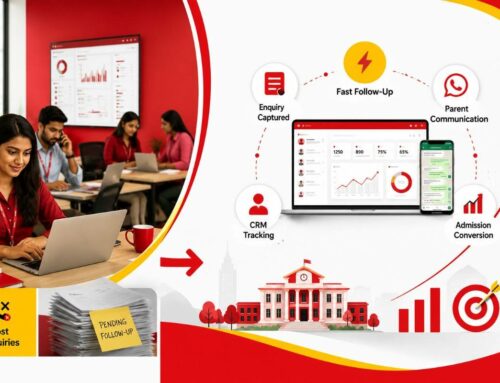
- Connect marketing, CRM and admissions follow-up so every channel supports the same journey.
1. Segment Audiences by Programme, Intent and Life Stage
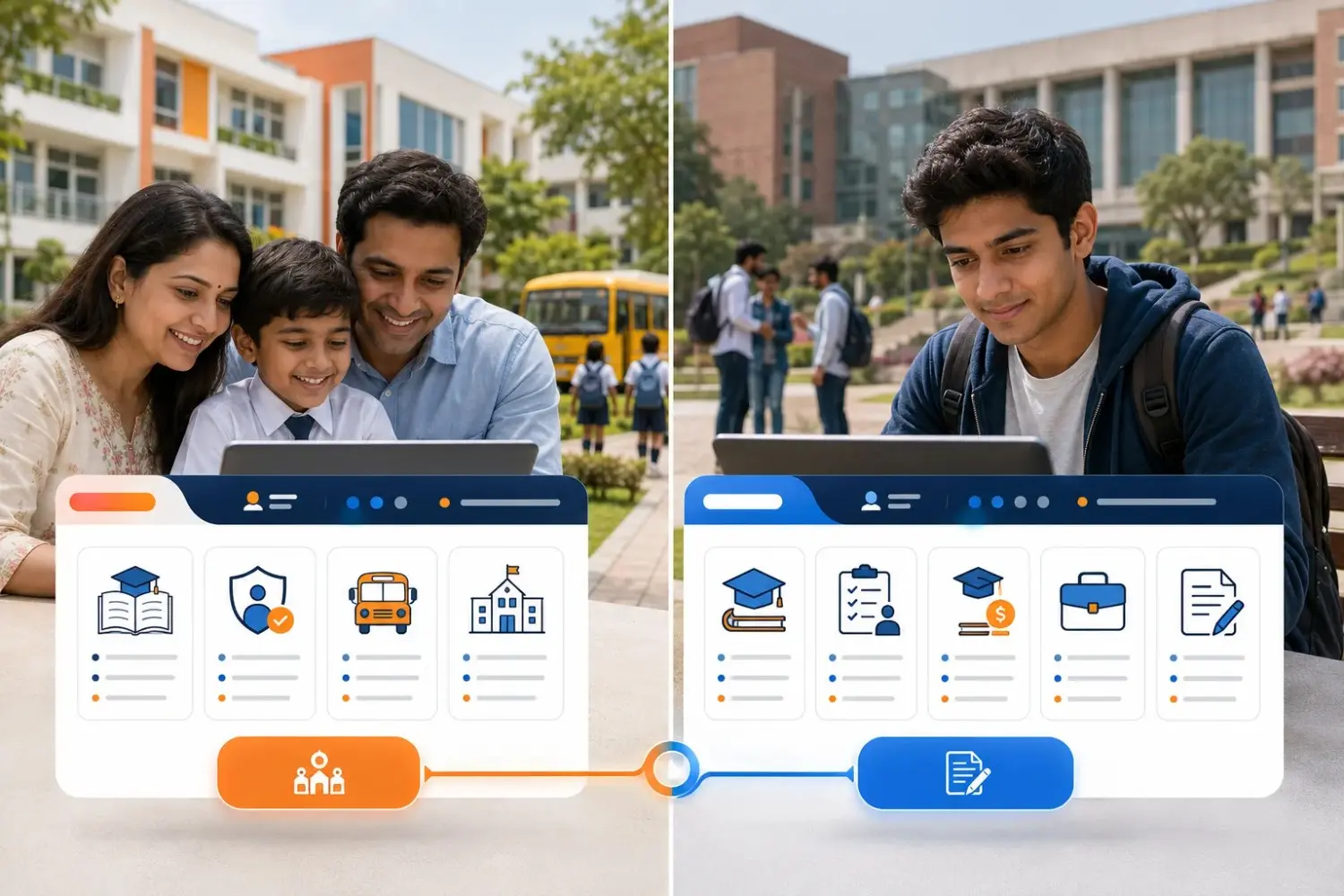
Not every prospect has the same questions. An undergraduate applicant, MBA aspirant, working professional and parent may evaluate the same institute differently.
Start by segmenting audiences by programme, qualification level, geography, campus preference, career goal, affordability concern and stage in the admission journey.
Use website behaviour, CRM data and counsellor feedback to refine these groups and create a simple message matrix. A digital marketing audit and consultation can also help identify gaps between audience intent, messaging and current campaign performance.
This prevents generic communication and makes campaigns more relevant. A working professional may need flexibility and career relevance, while a parent may focus more on safety, support, accreditation and outcomes.
Track: Qualified-enquiry rate and application rate by audience segment.
2. Turn the Website into a Mobile-First Admissions Platform
The website should help prospects make decisions quickly.
Every priority programme page should clearly explain the programme, eligibility, admission process, curriculum, fees, scholarships, important dates, faculty, facilities, career pathways and next steps.
Avoid placing essential information only inside PDFs. Important details should be readable on mobile devices and available as indexable page content.
Use stage-specific CTAs such as “Check eligibility,” “Download brochure,” “Attend an information session,” “Speak with a counsellor” or “Start your application.” Keep initial forms short and ensure campaign landing pages match the message promised in the advertisement or search result. Strong web design and development for education brands can connect mobile usability, page speed and admission conversion.
Track: Programme-page engagement, form completion, enquiry rate and enquiry-to-application rate.
3. Strengthen SEO, Local SEO and Technical Discoverability
SEO remains one of the most important digital marketing strategies for educational institutes because students actively search for programmes, fees, eligibility, admissions, scholarships and careers.
Build pages around specific intent rather than only broad terms such as “best college.” Focus on search themes such as programme eligibility, fees, specialisations, career options, entrance exams, admission dates, campus location and programme comparisons.
Technical SEO should cover crawlability, indexation, page speed, mobile usability, internal linking, canonical tags and XML sitemaps. Structured data should reflect visible page content accurately.
Maintain accurate Google Business Profile information for eligible physical campuses. Specialised SEO services for the education sector can support technical, on-page and local search visibility across programme and campus pages.
Track: Non-branded visibility, organic visits, qualified organic enquiries and organic applications.
4. Optimise for AEO, GEO and AI Search
Students increasingly ask detailed questions through AI assistants and conversational search. That makes clear, factual and structured information more important.
Answer important questions directly on programme pages. State duration, eligibility, fees, mode, intake, accreditation, deadlines and application steps in plain language. Use descriptive headings, concise answers, lists, tables and FAQs where they improve understanding.
Keep facts consistent and update changing information such as fees and dates quickly.
AEO and GEO should strengthen, not replace, SEO. The goal is to make content easier for search systems and AI tools to understand and cite.
Track: Visibility for target questions, accurate brand mentions, assisted search traffic and conversions from informational pages.
5. Publish Decision-Support Content With Real Expertise
Content should help students and parents make a meaningful education decision. Instead of publishing disconnected articles, build topic clusters around priority programmes and admission questions.
Useful content includes programme comparisons, admission checklists, scholarship explainers, career pathways, faculty viewpoints, student projects, alumni journeys, parent guides and international-student information.
Use named experts, transparent sources and verified student or alumni stories. Keep career and placement claims current and supportable.
Link supporting articles back to relevant programme pages so content contributes to both discovery and conversion. A focused content marketing strategy for educational institutions can align search demand, student questions and institutional expertise.
Track: Engaged visits, return visits, content-assisted enquiries and applications.
Need a Connected Education Marketing Strategy?
Bring your website, SEO, content, media and admission journey together with digital marketing for the education industry.
6. Use Social Media as a Search and Trust Channel
Prospective students now use social platforms to evaluate programme quality, campus life, faculty, student experience and institutional credibility.
- Instagram can support campus and student-life discovery.
- YouTube can host programme explainers, sample lectures and virtual tours.
- LinkedIn can showcase faculty expertise, partnerships and alumni careers.
- Facebook may remain useful for parents, alumni and local communities.
Avoid publishing identical content everywhere. Adapt the format, hook and CTA to the platform. Use searchable titles, captions and on-screen text so content is easier to discover. Well-planned social media marketing for educational institutions can support awareness, engagement and student trust.
Track: Branded searches, saves, meaningful comments, profile visits and assisted enquiries.
7. Build a Short-Form and Long-Form Video Engine
Video helps prospects see the people, spaces and learning experiences behind an institute’s claims.
Use short-form videos for quick discovery topics such as student life, application reminders, programme FAQs, labs, projects, faculty insights and common admission questions. Keep each video focused on one topic and add captions.
Use long-form video for deeper evaluation. Programme walkthroughs, sample lectures, faculty discussions, student panels, placement-process explainers and virtual tours can help prospects compare options.
Repurpose one webinar into long-form video, short clips, social posts and email follow-ups. Dedicated video marketing services for the education industry can help build a repeatable content engine across the admission funnel.
Track: Watch time, completion rate, clicks to programme pages and video-assisted applications.
8. Activate Students, Alumni and Trustworthy Social Proof
Students and alumni can show what the learning experience feels like in a way institutional copy often cannot.
Create a governed ambassador programme with students from different programmes, years and backgrounds. Content may include classroom experiences, projects, internships, campus life, Q&A sessions and applicant advice.
Set clear rules for consent, privacy, safety and disclosure.
Reviews, testimonials, rankings and placement information should be current and verifiable. Avoid fabricated reviews or exaggerated outcome claims. Specific, supportable proof builds more trust than general superlatives.
Track: Engagement quality, review themes, assisted enquiries and reusable student-created content.
9. Optimise Paid Media for Applications, Not Cheap Leads
A low cost per lead does not automatically mean a campaign is effective. The real question is whether campaigns produce contactable, eligible prospects who progress to applications and enrolments.
Use search advertising for high-intent demand and social or video advertising for awareness and retargeting. Separate campaigns by programme, geography or audience when budget and data allow.
Maintain strong campaign hygiene with negative keywords, exclusions, location controls and accurate conversion tracking.
Most importantly, connect CRM outcomes back to campaigns. Review qualified enquiries, applications, fee payments and enrolments so budget decisions are based on lead quality rather than raw volume. A structured education lead generation strategy can connect targeting, landing pages and conversion optimisation.
Track: Cost per qualified lead, cost per application, cost per enrolment and enrolment yield.
10. Personalise Email, WhatsApp and SMS Nurturing
Most prospects need several relevant touchpoints before applying. Build separate nurture journeys for new enquiries, engaged prospects, webinar attendees, incomplete applications and admitted students.
Email works well for detailed programme information, guides and stories. Permission-based WhatsApp or SMS is useful for reminders, deadlines, short updates and counsellor conversations.
Personalisation should reflect programme interest, location and admission stage. Avoid sending the same message repeatedly across every channel.
Use genuine deadlines, reasonable frequency and clear opt-out choices.
Track: Response rate, application-start rate, application completion, counselling bookings and opt-outs.
Generating Enquiries but Losing Applications?
Improve lead qualification, follow-up and counselling with telecalling and voice support for educational institutes so more qualified prospects move from enquiry to application.
11. Use AI Chatbots for Fast Answers and Human Handoff
AI chatbots can answer routine admission questions outside office hours and reduce repetitive work for counsellors.
Train the chatbot on approved information about programmes, eligibility, documents, fees, scholarships, important dates, campus visits and contact details. Accuracy is essential. Assign a content owner, review incorrect responses and link answers to official source pages where possible.
Special eligibility cases, grievances, financial guidance and final admission decisions should be transferred to authorised staff. Explain when users are interacting with automation and collect only necessary data.
Track: Resolution rate, escalation rate, answer accuracy and chatbot-assisted enquiries.
12. Use Virtual Tours, Webinars and Live Digital Experiences
Many prospects want to understand a campus or programme before visiting in person. Virtual experiences can reduce uncertainty and support evaluation.
Useful formats include virtual campus tours, programme information sessions, faculty masterclasses, student or alumni panels, parent sessions, scholarship explainers, application clinics and live Q&A events.
Each event should have one clear audience, objective and next step. After the event, share the recording, answer unresolved questions and guide the attendee towards the most relevant action.
Pass programme interest and event questions into the CRM so follow-up feels informed.
Track: Registration-to-attendance rate, engagement, counselling bookings and attendee-to-application rate.
13. Connect CRM, Counselling and Telecalling
Marketing performance becomes difficult to improve when lead outcomes are scattered across spreadsheets, inboxes and different teams.
Use a central CRM with clearly defined stages such as enquiry received, contact attempted, qualified prospect, application started, application completed, fee paid and enrolled.
Route enquiries by programme, geography or urgency and give counsellors relevant source and interest data where consent permits.
Standardise call outcomes and reasons for loss. If prospects frequently mention unclear fees, eligibility or location, use that insight to improve pages, targeting and messaging.
Feed application and enrolment outcomes back into campaign reporting so marketing decisions reflect actual admission performance. Institutes can also strengthen follow-up through telecalling and voice support services when counselling teams need structured lead contact and qualification.
Track: Contact rate, response time, qualified-lead rate, lead-to-application rate and application-to-enrolment rate.
14. Build a Privacy-First, Accessible and Ethical System
Education marketing depends on trust. Institutes may collect contact details, academic interests and application information, so data use should be purposeful and transparent.
Explain why data is collected, request only necessary information and provide appropriate consent and preference controls. Review data access, retention and third-party processing.
Marketing claims about rankings, placements, scholarships, accreditation and admissions should remain current and supportable. Avoid guaranteed outcomes or language that may mislead prospects.
Build accessibility into digital channels through alt text, readable contrast, captions and clear language.
The same facts should remain consistent across advertisements, webpages, chatbots, counsellor scripts and social posts.
Track: Consent rates, opt-outs, complaints, claim corrections and accessibility issues.
15. Measure the Full Funnel and Optimise Continuously
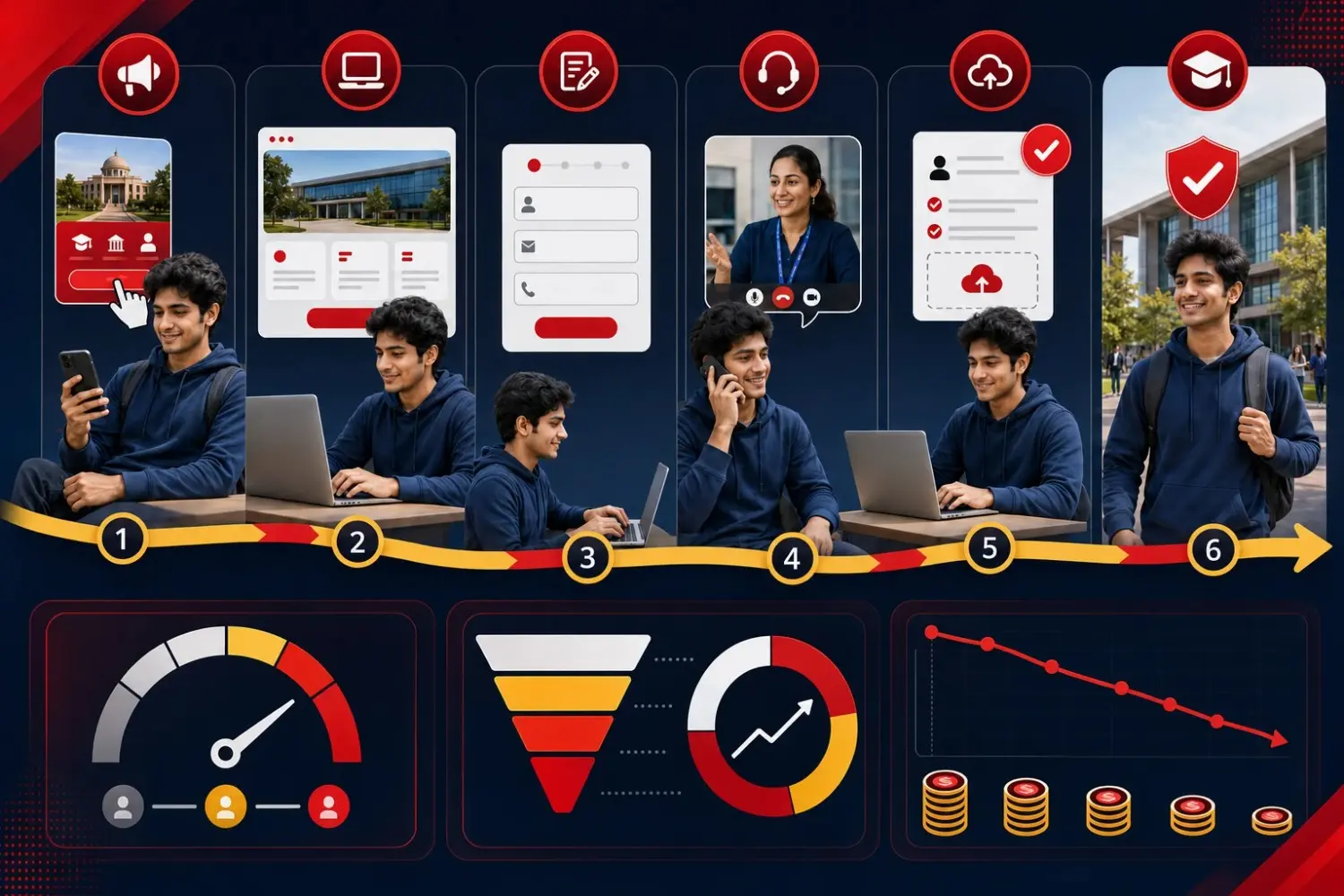
The final strategy connects every other activity. Reporting should show how marketing contributes to qualified applications and enrolments, not just impressions, clicks and form submissions.
Track the full funnel from awareness to enquiry, qualification, application, fee payment and enrolment. Combine website analytics, Search Console, advertising platforms, CRM records, application systems and call outcomes.
Test landing-page headlines, forms, CTAs, creative formats and nurture messages against a defined success metric.
Budget decisions should consider lead quality, application completion and enrolment yield. A channel with a higher initial CPL may still produce stronger admission results.
Track: Cost per qualified lead, cost per application, application completion, cost per enrolment and enrolment yield.
How to Prioritise the 15 Strategies
Start with the biggest gaps in the admission journey rather than launching all 15 strategies at once.
PriorityFocus
| First | Fix tracking, mobile programme pages, audience segmentation and lead-quality definitions. |
| Next | Strengthen SEO, paid media, content and nurture journeys. |
| Then | Add video, webinars, AI chatbot support and student ambassadors. |
| Ongoing | Improve CRM reporting, privacy, accessibility and full-funnel optimisation. |
More traffic will not solve incomplete programme information, weak landing pages or slow follow-up. Fixing the foundation usually improves the value of every later campaign.
Conclusion
The strongest digital marketing strategies for educational institutes work as one connected system. SEO, AEO and GEO improve discovery. Content, social proof and video build trust. Paid media accelerates reach. Email, messaging, chatbots and counsellors support decisions. CRM and analytics show which activities contribute to applications and enrolments.
The goal is a clear, trustworthy and measurable admission journey, not presence on every platform.
Ready to Improve Your Admission Marketing?
Build your strategy around qualified enquiries, applications and enrolments. Contact SRV Edge to strengthen your education marketing journey.
Frequently Asked Questions
Which digital marketing strategy is most effective for educational institutes?
The best mix depends on programmes, audience, admission cycle and digital maturity. SEO and content support long-term discovery, while paid media and CRM-led nurturing support acquisition and progression.
How can educational institutes improve lead quality?
Use precise audience targeting, clear programme information, relevant landing pages, qualification questions and CRM feedback. Measure which campaigns produce eligible prospects and applications rather than optimising only for the cheapest form submissions.
What is the role of AEO and GEO in education marketing?
AEO and GEO help structure factual institutional information so search engines and AI-powered tools can understand and cite it more easily. They work best when combined with strong SEO, accurate programme pages and trustworthy content.
How should institutes measure digital marketing ROI?
Connect campaign cost with qualified leads, completed applications, fee payments and enrolments. Useful metrics include cost per qualified lead, cost per application, cost per enrolment and enrolment yield.